Myfxbook alternative: when you need a journal, not just statistics
Myfxbook is one of the best free tools a forex trader can have. Connect your MetaTrader account and you get detailed statistics without typing a thing. But statistics aren’t a journal. If you want to know why you win and lose, and change it, you’ll probably need something alongside it, or instead of it.
What Myfxbook does well
- Automatic statistics. Growth, drawdown, profit factor, results by pair and time, without manual entry.
- Wide platform support. MT4, MT5, cTrader and others, usually through your read-only investor password.
- Verified track records. It can verify and publish a track record, which matters if you want to share results.
- Free core features. The main account analytics cost nothing. Some extras, such as faster live updates, are paid. (Overview of features and limits.)
Where it falls short as a journal
- It records what happened, not why. It knows you bought GBP/USD at 13:50. It doesn’t know it was a liquidity sweep in the New York kill zone that you graded B.
- Setups depend on tagging. You can add tags and comments, but nothing makes you choose a setup, grade it or check your rules before you trade.
- Your account data lives on its servers. Even with a read-only connection, account numbers, balances and history are shared with a third party. Many traders are happy with that; some aren’t.
- No pre-trade discipline. It analyses trades after the fact. The expensive mistakes happen before you click buy.
The alternatives
| Option | Best for | Price |
|---|---|---|
| FX Blue | Similar automatic MT4/MT5 statistics | Free |
| A spreadsheet template | Logging setups, sessions and rules yourself | Free |
| TradeZella, TraderSync, Tradervue | Broker sync plus deep analytics | From about $26 to $80 a month (Nov 2026) |
| Edgewonk | Psychology tracking | $197 a year |
| The Trader’s Ledger | Setups, rules and pre-trade grading for forex and gold | £19 once (launch price until 31 Dec 2026) |
Prices as listed by each company or reported in November 2026. They change often, so check before you buy.
Use both
You don’t have to choose. Plenty of traders keep Myfxbook for the automatic numbers and a journal for the decisions. Myfxbook tells you your profit factor dropped this month; your journal tells you it’s because you started taking C-grade trades in the Asian session.
The Trader’s Ledger is built for that second job. You pick one of 25 written setups, it grades the trade A+ to Skip on a pre-trade check, works out your lot size, and shows your results by setup and session. Your trades stay in your own browser, with no account and nothing uploaded.
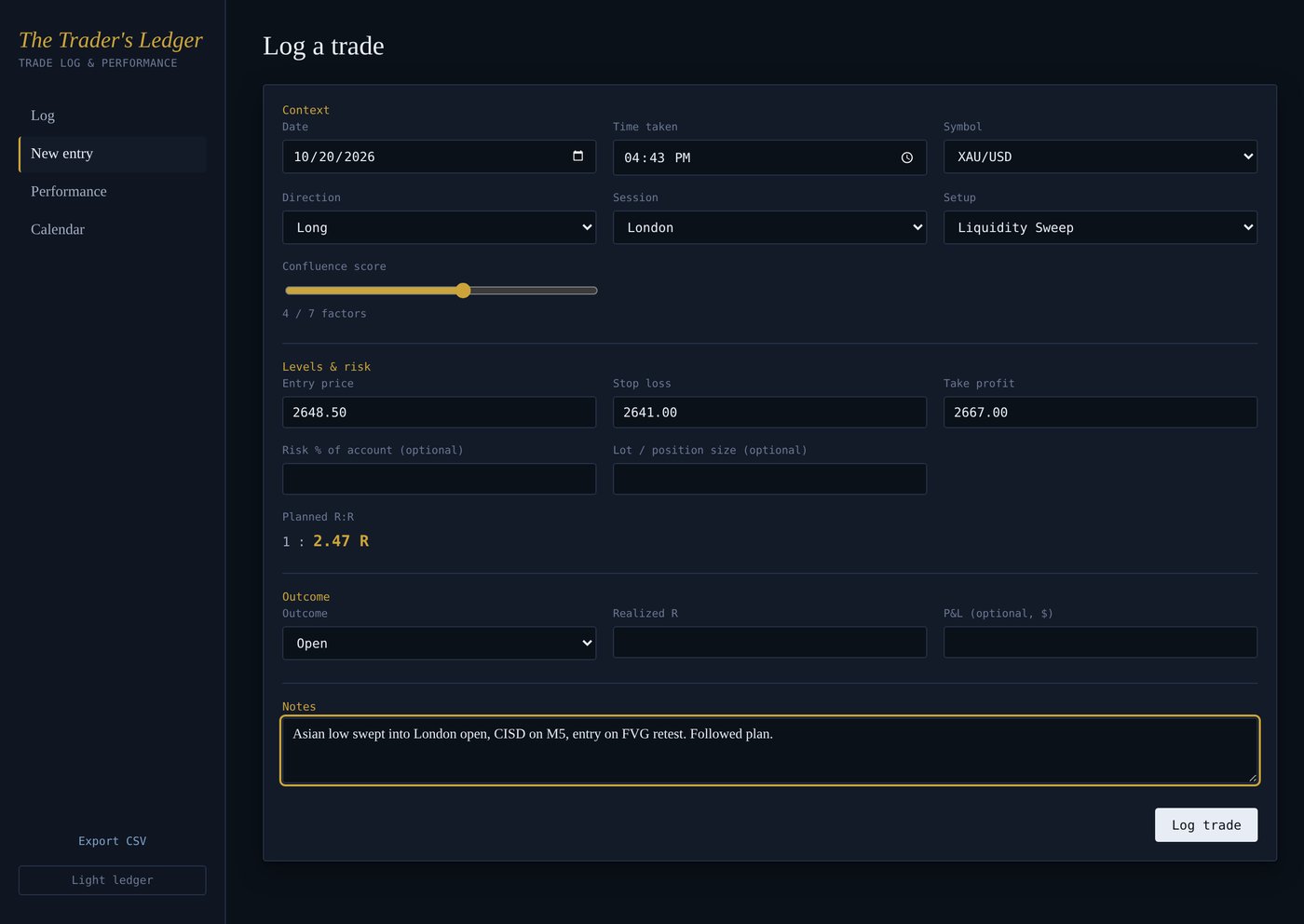
The journal that records the why
The Trader’s Ledger runs in your browser with nothing to install: 25 written setup cards, a pre-trade check that grades every trade A+ to Skip, lot sizes worked out for you, your stats by setup and session, and a free 49-page trading course. £19 once, the launch price until 31 December 2026, with a 14-day money-back guarantee.
See The Trader’s LedgerFrequently asked questions
What is a good alternative to Myfxbook?
FX Blue offers similar free MT4 and MT5 statistics. If you want a journal that records setups, grades and rules, rather than statistics alone, a spreadsheet template or a dedicated journal such as The Trader’s Ledger is a better fit.
Is Myfxbook a trading journal?
It’s mainly an automatic statistics and track-record tool. It supports tags and comments, but it doesn’t make you record a setup, grade or plan for each trade.
Is it safe to connect MT4 to Myfxbook?
Myfxbook normally uses your read-only investor password, which can’t place trades. Your account details and history are still shared with a third party, so use two-factor authentication and check the privacy settings.
Can I use Myfxbook and a trading journal together?
Yes, and it’s a good combination: Myfxbook for automatic statistics, a journal for the reasons, setups and rules behind each trade.
Educational content only, not financial advice. Trading carries a high level of risk and you can lose more than you expect. Examples use illustrative prices.