How to trade a liquidity sweep, step by step
A liquidity sweep is one of the most useful patterns a forex or gold trader can learn. It explains why price so often spikes through an obvious high or low, stops everyone out, and then turns sharply the other way. Once you can spot it, you'll stop being the liquidity and start trading it.
What is liquidity?
In trading, liquidity means orders waiting to be filled. Large players (banks and funds) need a lot of them, because their positions are too big to fill at a single price. The biggest clusters of waiting orders sit in predictable places: just beyond obvious highs and lows.
The places to watch:
- Equal highs and equal lows: two or more tops or bottoms at the same price.
- Obvious swing highs and lows, especially on the H1 chart and above.
- The previous day's high and low, and the previous week's.
- The Asian session high and low, often the first target when London opens.
What is a liquidity sweep?
A liquidity sweep happens when price spikes through one of those levels, triggers the orders sitting there, and then closes back inside the range. The stops have been taken, the big player has filled their position, and price often reverses hard.
Sweep or breakout? The one rule that tells them apart
Not every move through a high is a sweep. Sometimes the orders fuel a genuine breakout and price keeps going. The difference is in the close:
| You see | It's probably | What to do |
|---|---|---|
| A wick through the level, candle closes back inside | A sweep | Look for a reversal entry |
| Candles close beyond the level and hold there | A breakout | Don't fade it. Consider a break and retest instead |
A five-step plan for trading the sweep
- Mark the liquidity before the session. Previous day's high and low, the Asian range, any equal highs or lows. Don't hunt for them after price has already moved.
- Know your bias. Use the H4 or daily structure. Sweeps that go against your bias (a sweep of the lows in an uptrend) are the ones worth trading.
- Wait for the sweep candle to close back inside. No close back inside, no trade.
- Enter on the shift. Drop to the M5 or M15 and wait for price to break the last small swing back in your direction (a break of structure, or a CISD).
- Stop beyond the wick, target the other side. The stop goes a few pips beyond the sweep's extreme. The first target is the opposite side of the range or the next pool of liquidity. Aim for at least 1:2.
The best times to look for sweeps
Sweeps happen all day, but the clean ones cluster around session opens, when fresh volume arrives. For UK traders, that's the London kill zone (07:00 to 10:00) and the New York open (12:00 to 15:00). The Asian session high and low are the classic first target for London.
Log every sweep you take
The only way to know whether sweeps work for you is to record them. Log each one with the setup name, the session, your entry, stop and target, and whether you followed your rules. After 30 trades you'll know your real win rate and average R for this setup, not someone else's.
Get the free Liquidity Sweep cheat sheet
The five-step checklist, the skip rules and the best times to trade it, on two printable pages.
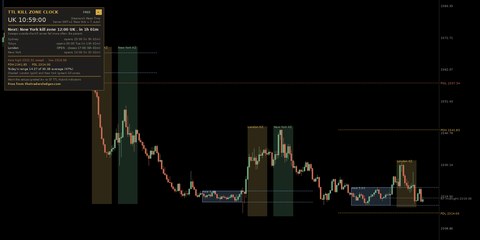
Send me the cheat sheetIf you trade on MetaTrader, TTL Smart Money Pro marks liquidity sweeps by name on MT4 and MT5, and tells you in its panel when it skipped one because price held beyond the level.
Frequently asked questions
Is a liquidity sweep the same as a stop hunt?
Broadly, yes. “Stop hunt” describes it from the losing trader's side; “liquidity sweep” describes what the larger player is doing: using those orders to fill a position.
What timeframe is best for liquidity sweeps?
Mark the levels on H1 and above, then look for the sweep and the entry on M5 to M15. Higher-timeframe levels give the most reliable sweeps.
Do liquidity sweeps work on gold?
Yes. Gold (XAUUSD) sweeps highs and lows often, especially around the London open and US data. Allow a slightly wider stop buffer because gold moves fast.
Where should my stop go on a sweep trade?
A few pips beyond the extreme of the sweep wick. If price goes back beyond that point, the sweep has failed and the idea is wrong.
Educational content only, not financial advice. Trading carries a high level of risk and you can lose more than you expect. Examples use illustrative prices.