The best time to trade gold in UK time, hour by hour
Gold trades nearly 24 hours a day, five days a week. That doesn’t mean you should. Most of gold’s daily movement is packed into a few hours, and the rest of the day is mostly noise and spread. Here’s the gold day in UK time, and which parts are worth your attention.
The gold day, hour by hour
| UK time | What’s happening | For traders |
|---|---|---|
| 00:00–06:00 | Asian session. Gold usually drifts in a narrow range. | Mark the Asian high and low. It’s the map for London. |
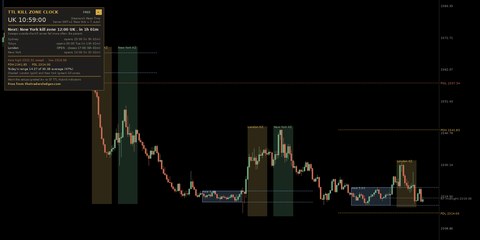
| 07:00–10:00 | London kill zone. European traders arrive; London opens at 08:00. | Prime time. London often runs one side of the Asian range, then turns or trends. |
| 10:30 | LBMA Gold Price morning auction in London. | Can bring a burst of activity. Worth knowing it’s there. |
| 10:00–12:00 | London lunch lull. | Often slower and choppier. Fewer clean setups. |
| 12:00–15:00 | New York kill zone. US data at 13:30, US stocks open at 14:30. | The biggest moves of the day often start here, especially on data days. |
| 15:00 | LBMA Gold Price afternoon auction. | Another reference point; London starts winding down after it. |
| 15:00–17:00 | Rest of the London / New York overlap. | Still liquid, but the morning move is often done. |
| 17:00–22:00 | Afternoon New York. | Thinner. Fed decisions (19:00 UK) are the big exception. |
| Around 22:00–23:00 | Daily rollover and, at most brokers, a short trading break. | Spreads widen. Avoid opening trades here. |
The two windows worth trading
1. The London open (07:00–10:00 UK)
The quiet Asian session leaves a range with stops resting above its high and below its low. London traders arrive and very often run one side of it first. That run is either the start of the day’s trend or a sweep before a reversal, and telling the two apart is what the London open is about. See London kill zone times and how to trade a liquidity sweep.
2. The New York morning (12:00–15:00 UK)
US data at 13:30 UK is the main event on most days, and gold reacts to it within seconds. The safer approach for most traders is to let the first spike happen, then trade the structure that forms afterwards. The ICT Silver Bullet window (15:00–16:00 UK) is a popular, rule-based way to do that.
Hours to avoid
- The daily rollover (around 22:00–23:00 UK): wide spreads, often a short break in trading.
- The first minutes after high-impact US news: stops can slip and spreads can jump.
- Sunday evening’s open: thin, gappy price until Asia gets going.
- The deep Asian session, unless you specifically trade ranges.
- Friday afternoon, once New York has made its move: weekend risk and profit-taking.
When the clocks change
The UK changes its clocks on the last Sunday of March and October; the US on the second Sunday of March and the first Sunday of November. In the gap weeks (about three in March and one around the end of October), everything driven by New York, including US data, the stock open and the daily rollover, happens an hour earlier in UK time. The London times don’t change.
Find your best trading hours
The Trader’s Ledger shows your win rate and R by session and by setup, so you can see which gold window really pays you. £19 once, with a free 49-page trading course.
Get The Trader’s LedgerNew to gold? Start with how to trade gold for beginners. On MetaTrader, TTL London Session Pro and New York Session Pro mark these windows and their setups for you.
Frequently asked questions
What time is the gold market most active in the UK?
From the London open (07:00–10:00 UK) and during the London and New York overlap (13:00–17:00 UK), especially around US data at 13:30.
What time does gold open on Sunday in the UK?
Usually around 23:00 UK on Sunday, depending on your broker. The first hour is often thin and gappy.
What are the LBMA gold auction times?
The LBMA Gold Price is set twice each London business day, at 10:30 and 15:00 London time.
Is it good to trade gold during the Asian session?
It’s usually quiet and range-bound. Many traders use it only to mark the Asian high and low for the London open.
Educational content only, not financial advice. Trading carries a high level of risk and you can lose more than you expect. Examples use illustrative prices.